 Saturday, June 20, 2026

6.29 Redefining the Workplace: Is Your Office Good for the Planet?
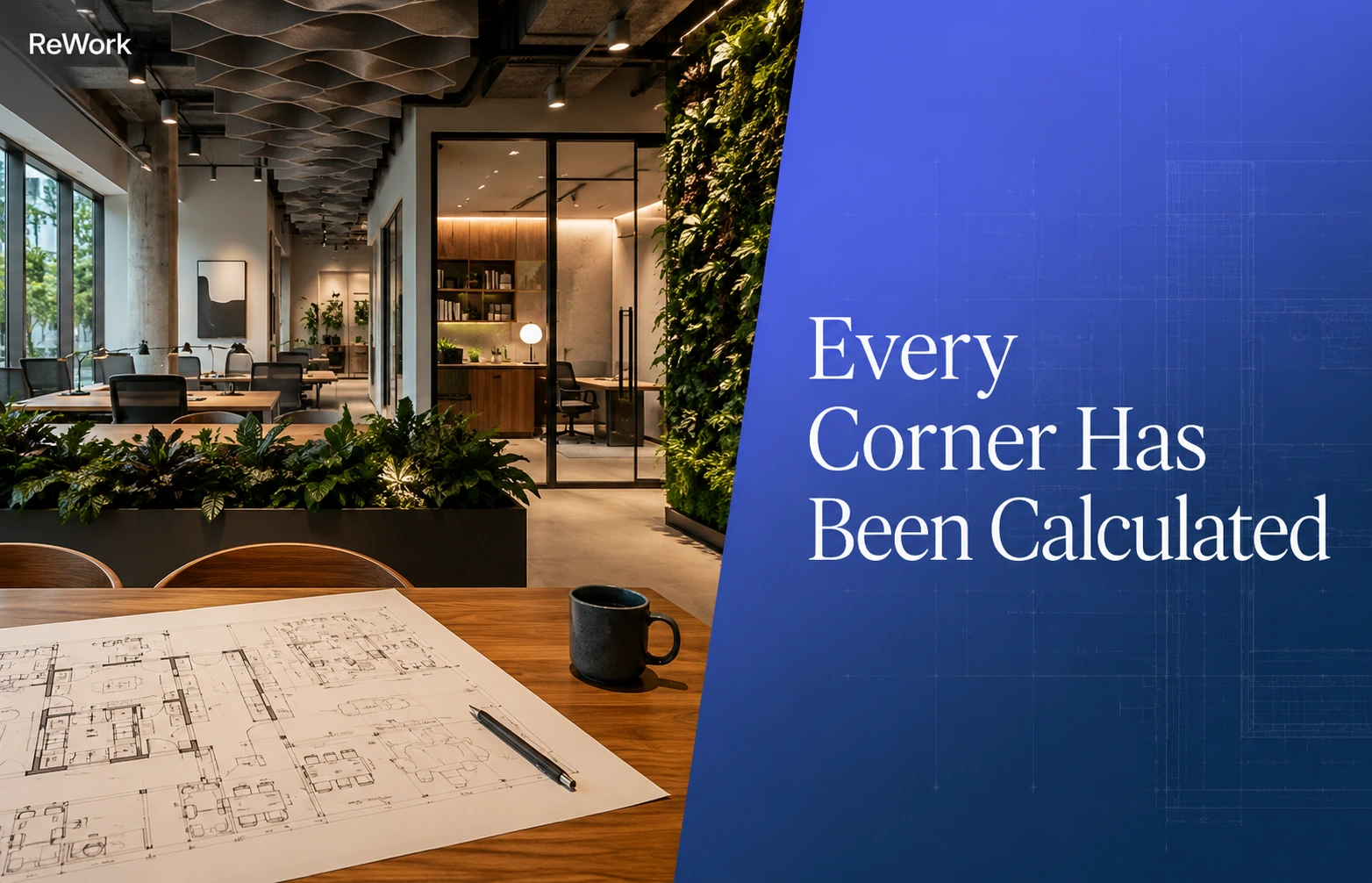
Is Your Office Good for the Planet? Last week, Issue 6 of the Redefining the Workplace series explored Office Space Planning and Design — the science of translating organizational needs into functional zones, circulation paths, acoustic strategies, and lighting schemes. We examined how every corner of a well-designed office is calculated rather than improvised. But that conversation left an even larger question unanswered: is the space itself good for the planet? When you choose what material goes on the floor, what system powers the HVAC, how many watts each workstation consumes, and where discarded furniture ends up — every decision carries a carbon ledger entry. And increasingly, investors, clients, employees, and regulators are demanding that ledger be made public.
This week, Issue 7 dives into ESG and Sustainable Offices — arguably the most consequential topic in the entire series, because sustainability is not an add-on feature. It is an answer to the question: what kind of footprint do we intend to leave?
What Is ESG and Sustainable Office Design?
ESG — Environmental, Social, and Governance — is the globally dominant framework for assessing corporate non-financial performance. In the office sector, ESG translates the fuzzy concept of “being green” into quantifiable, auditable, and comparable metrics.
- How many kilograms of carbon does your building emit per square meter per year? That is E.
- Does your indoor air quality, natural daylight access, and employee wellness data meet recognized thresholds? That is S.
- Have you traced the origin and labor conditions behind every material in your supply chain? That is G.
Sustainable office design goes far beyond switching to LED lighting or printing double-sided. It demands thinking that starts at the site selection stage: is this building certified green?
- Material procurement: do the carpet, partitions, and furniture carry verified environmental declarations?
- Operational phase: are HVAC, lighting, and IT energy consumption data tracked in real time?
- End-of-life phase: can old furniture, equipment, and renovation waste enter a circular economy loop instead of a landfill?
This is a cradle-to-cradle chain. And its driving force has shifted from corporate social responsibility sentiment to hard commercial reality: a strong ESG rating now directly affects financing costs, rental premiums, and talent attraction.
At least five core dimensions define this field:
Green Building Certification Systems
These are the rulebooks. Without them, there is no agreed-upon definition of what “green” even means.
LEED (Leadership in Energy and Environmental Design), administered by the U.S. Green Building Council, is the world’s most widely applied green building rating system. By the end of 2025, China had accumulated more than 7,000 LEED-certified projects covering over 150 million square meters, ranking first globally in LEED certifications for multiple consecutive years — more than 70 percent of Grade-A office buildings in Shanghai already hold LEED certification.
BREEAM, managed by the UK’s Building Research Establishment, is the oldest green building assessment methodology and carries significant weight in European and Asia-Pacific markets.
WELL, created by Delos and administered by the International WELL Building Institute, focuses specifically on how buildings impact human health — evaluating across ten dimensions: air, water, nourishment, light, movement, thermal comfort, sound, materials, mind, and community — with over four billion square feet of space globally registered or certified.
In China, the national Three-Star Green Building Label serves as the domestic standard and has been progressively raised to align with international benchmarks. A critical trend: leading enterprises are no longer satisfied with a single certification. Triple certification — LEED Platinum plus WELL Platinum plus Green Building Three-Star — is becoming the baseline for flagship office projects in China’s tier-one cities.
Carbon-Neutral Workspaces and Energy Management
This is the most visible and urgent dimension of E (Environmental). Approximately 70 to 80 percent of an office building’s lifecycle carbon emissions originate during the operational phase, predominantly from electricity consumption.
Schneider Electric, a global leader in this domain, has published research demonstrating that deploying digital building and power management solutions in existing office buildings can reduce operational carbon emissions by up to 70 percent. Its EcoStruxure platform is deployed across more than one million buildings worldwide, continuously monitoring energy consumption, air quality, and equipment status, while using AI algorithms to optimize HVAC scheduling, lighting levels, and peak load management.
Siemens brings its Building X platform to the same challenge, combining building automation with intelligent energy optimization. Johnson Controls offers its OpenBlue digital platform for building efficiency and HVAC optimization.
Further ahead, the concept of Net Zero Energy Buildings — structures that produce as much or more renewable energy than they consume through photovoltaics, ground-source heat pumps, and high-performance building envelopes — is gaining traction through certifications such as LEED Zero and the Living Building Challenge.
In the renewable energy space, Chinese company Envision has grown into a global green technology leader spanning smart wind turbines, energy storage systems, and integrated zero-carbon industrial park solutions. Huawei Digital Power is also expanding rapidly in smart photovoltaics, data center energy efficiency, and campus-level energy management.
Sustainable Office Furniture and Materials
Carbon emissions from office furniture and interior materials are among the most overlooked — yet together they can account for 15 to 25 percent of a space’s lifecycle carbon footprint.
Interface, inventor of the modular carpet tile and the industry benchmark for sustainable materials, achieved full product carbon neutrality through its Mission Zero commitment by 2020 and is now advancing its Climate Take Back plan with a target to become carbon-negative by 2040. Its carpet products use recycled nylon yarn made from discarded fishing nets — yes, ocean waste fishing nets — combined with a closed-loop take-back system for end-of-life carpet tiles.
Steelcase ranks among the ESG leaders in the office furniture sector, publishing an annual Chairman’s Report that tracks supply chain carbon emissions, product material health, and circular design principles, with a commitment to carbon neutrality in its own operations by 2030.
Herman Miller, now part of MillerKnoll, incorporates significant proportions of ocean-bound recycled plastics and reclaimed materials; its ocean-bound plastic edition of the iconic Aeron chair converts recovered fishing nets into chair components, and the company publishes full chemical ingredient disclosure for third-party review.
Humanscale became the first office furniture brand to publicly commit to Net Positive — all its products carry Living Product Challenge certification and Declare material transparency labels, with renewable energy procurement and carbon credits offsetting emissions beyond its operational footprint.
In China, Sunon Technology has partnered with Chinese Academy of Engineering academicians to launch the country’s first used furniture recycling and reuse initiative, developed the Haff health chair using ocean-recycled materials, and deployed photovoltaic power generation at its Zhongshan manufacturing base. Its research institute prioritizes green and smart as twin innovation pillars, building a high-value regeneration closed-loop technology system. Aurora and Zhaosheng are also advancing sustainability in the Chinese market, with Zhaosheng pioneering powder-coating processes as an alternative to traditional paint to dramatically reduce VOC emissions.
ESG Data, Ratings, and Reporting
After constructing a green building, installing sustainable materials, and deploying energy-efficient systems, how do you prove any of it worked? This is the territory of ESG data and rating agencies. GRESB (Global Real Estate Sustainability Benchmark) is the authoritative standard for ESG assessment in commercial real estate and infrastructure, covering over 2,000 real estate entities and funds representing more than eight trillion US dollars in assets under management as of 2025.
Investors, REITs, and pension funds reference GRESB scores directly when making capital allocation decisions. CDP (Carbon Disclosure Project) operates the world’s largest environmental data platform, with over 23,000 companies disclosing carbon emissions, water security, and forest impact data through its system.
On the ratings side, MSCI ESG Ratings, S&P Global CSA, and EcoVadis represent the most influential international corporate ESG evaluation frameworks. The S&P Global Sustainability Yearbook 2026 recognized 57 mainland Chinese companies, with Kingsoft Office ranking among the leaders in the software and services category.
In real estate services, JLL and CBRE both maintain dedicated ESG consulting and sustainability advisory teams, helping commercial property owners conduct carbon audits, prepare GRESB submissions, and develop green leasing strategies.
In China, M&G Stationery became the first listed company in the Chinese stationery industry to publish an ESG report — its Eco+Office series of low-carbon office consumables enables enterprises to achieve measurable emissions reductions through everyday procurement decisions, making what appears to be a small category a surprisingly accessible entry point for corporate ESG practice across the Chinese market.
Health, Equity, and Employee Wellbeing
ESG is not only about the E. The S — Social — is equally significant in the office context and rising in priority. Does indoor air quality meet recognized health thresholds? Are ventilation rates comfortably above minimum code requirements? A question that COVID-19 elevated to permanent priority. Do all workers — including cleaning, security, and facility staff — receive fair compensation and benefits? Is the workspace barrier-free for people with disabilities? Are materials in your supply chain free of conflict minerals or forced labor?
The WELL Building Standard provides operational tools for the S dimension — from air quality sensors to water quality testing to minimum daylight autonomy thresholds — quantifying the commitment to employee health.
The RESET Standard focuses specifically on real-time indoor air quality, water, and energy monitoring through IoT sensors, replacing static annual assessments with dynamic, continuous data that reflects every day and every moment.
Meanwhile, DEI (Diversity, Equity, and Inclusion) considerations are increasingly influencing office space design: gender-neutral restrooms, nursing and mother’s rooms becoming standard rather than exceptional, and workspaces configured to accommodate varied neurodiversity needs — some people thrive with high sensory stimulation while others require absolute silence — transforming the office from a space that contains everyone into a space that fits everyone.
Who Is Shaping This Space?
- USGBC / LEED — World’s most widely applied green building certification system; China: 7,000-plus certified projects, ranked first globally for multiple consecutive years
- BRE / BREEAM — Oldest green building assessment methodology; dominant in European and Asia-Pacific markets
- IWBI / WELL — Health-centered building certification standard; four billion-plus square feet certified or registered globally
- GRESB — Authoritative global ESG benchmark for commercial real estate and infrastructure; 2,000-plus entities, eight trillion-plus USD in assets
- CDP — World’s largest environmental disclosure platform; 23,000-plus companies disclose carbon, water, and forest data
- MSCI ESG Ratings / S&P Global CSA — Most influential international corporate ESG evaluation frameworks
- Schneider Electric — Global leader in digital energy management and building automation; EcoStruxure deployed in one million-plus buildings; research shows digital solutions can cut office carbon emissions by up to 70 percent
- Siemens — Building X intelligent building platform; deep presence in building automation and energy optimization
- Johnson Controls — Building energy efficiency, HVAC optimization, OpenBlue digital platform
- Interface — Inventor of modular carpet tile and circular economy benchmark; Mission Zero carbon neutrality; recycled nylon from ocean fishing nets
- Steelcase — ESG leader in office furniture; commitment to carbon-neutral operations by 2030; Chairman’s Report tracking full-chain sustainability performance
- Herman Miller (MillerKnoll) — Pioneer in ocean-recycled plastics and reclaimed materials; Aeron ocean-bound plastic edition; full chemical ingredient disclosure
- Humanscale — First Net Positive-committed office furniture brand; Living Product Challenge certification across all products
- Sunon Technology — China’s green manufacturing leader in office furniture; academician-led used furniture recycling initiative; ocean-recycled material Haff chair; photovoltaic-powered manufacturing
- Aurora — Among China’s top ten office furniture leaders; sustained investment in green design and eco-friendly materials
- Zhaosheng — Pioneer in powder-coating technology as VOC-reducing alternative to traditional paint in China
- JLL — Global commercial real estate services; ESG consulting, carbon auditing, green leasing strategy
- CBRE — Global commercial real estate services; sustainability and ESG strategy advisory
- Envision — Global green technology leader; smart wind turbines, energy storage, integrated zero-carbon industrial park solutions
- Huawei Digital Power — Smart photovoltaics, data center energy efficiency, campus energy management
- M&G Stationery — First ESG-reporting listed company in China’s stationery industry; Eco+Office low-carbon consumables series
- Kingsoft Office — S&P Global Sustainability Yearbook 2026 recognized company in software and services category
A structural transformation is underway: ESG is shifting from reporting to transaction. Over the past decade, the primary driver of corporate ESG efforts was brand reputation and compliance — producing a respectable annual sustainability report.
Today, ESG data directly shapes real-money commercial decisions. Grade-A office buildings in London, New York, and Shanghai carrying LEED or BREEAM certifications can command rental premiums of 5 to 15 percent. A real estate fund with a GRESB score below a certain threshold may find itself excluded outright from the investment portfolio of a major Nordic pension fund. Office tenants — particularly regional headquarters of multinational corporations — are increasingly writing building carbon emissions data into the standard terms of their lease agreements.
For Chinese companies, an additional accelerator is going global. When a Chinese enterprise opens an office in the European Union, hires in the United States, or faces scrutiny within a global supply chain, ESG compliance transforms from an optional domestic bonus into a mandatory international market access ticket. The EU’s Corporate Sustainability Reporting Directive requires that non-EU companies with significant operations in Europe also disclose sustainability information according to the standard, beginning from the 2025 fiscal year. This means managing not only your own carbon emissions but the emissions of your entire supply chain.
Why Does This Matter for ReWork?
Over the first six issues, we have constructed the full skeleton of the ReWork exhibition — from AI hardware to collaboration software, from hybrid space operations to spatial planning and design. But all these dimensions lead to one fundamental question: is this space accountable to the planet?
ESG and Sustainable Office Environments represent the foundational code running through every category in the ReWork series. It is not a standalone display cabinet. It permeates every material selection in the ReWork build, every energy decision in its operation, every supply chain logic behind every exhibit on the floor.
From the design and construction phase of ReWork itself, ESG principles are already at work — material selection, construction methodology, energy use, and waste management are all putting into practice the philosophy we are discussing. This issue is not theoretical. At ReWork, you will walk inside it.
At ReWork this October, expect:
- A triple-certified office demonstration zone — so you can experience firsthand the measurable gap in air quality, daylight quality, and acoustic quality between a triple-certified office and a conventional one
- A zero-carbon energy live demonstration — is this office building a net emitter or a net producer?
- A circular-economy furniture gallery — The complete story — from fishing net to office chair — accessible with a single scan
- An ESG data cockpit — Experience what it feels like to see a building through the lens of ESG data
- An employee wellness experience station — Your body is telling you: is this space good for you? Using first-person physiological feedback to answer the S question — the human dimension of ESG
Coming next week: Issue 8 — Smart Commercial Real Estate for the Office. Having explored the E and the S of ESG, the next question is: who owns these sustainable buildings, who operates them, and who determines their value? From smart building technologies to PropTech, from REITs to office valuation models — next week we examine how intelligence is fundamentally reshaping the rules of commercial office real estate.
Event Details
Exhibition: RemaxWorld Expo 2026 (20th Anniversary)
Feature Zone: ReWork – Greater Bay Area International Exhibition for Office Space & AI Office Solutions
Dates: October 15-17, 2026
Location: Zhuhai International Convention and Exhibition Center
Stay tuned. The future of work unfolds every Monday.
Pre-registration is open! REGISTER NOW to secure your spot at the show.
For questions or more information, contact us at RemaxWorld@RTMworld.com
We look forward to welcoming global industry professionals to Zhuhai.

Related:
Redefining the Workplace: Your Office Is No Longer Just a Room
The AI Battlefield Is No Longer Confined to the Office
Redefining the Workplace: Your Desk Is Now Smarter Than You Think
Redefining the Workplace: Your Colleague Might Not Be Human Anymore
Redefining the Workplace: Your Mouse Just Got a Whole Lot Smarter
AI + Space: The Future of Work
RemaxWorld 2026: A New Chapter Begins
Celebrating the Success of RemaxWorld Expo 2025
Industry Future Discussed on Day 2 of RemaxWorld Summit 2025
RemaxWorld Summit 2025 Sparks Global Dialogue in Day One
13 Winners Announced for RT Global Imaging Industry Award 2025
Thousands Gather for Innovation and Networking at RemaxWorld Expo 2025
RemaxWorld Expo 2025 Is Ready to Welcome You!
10-Day Countdown Checklist for RemaxWorld Expo 2025
Surprises Never End as RemaxWorld Countdown Closes to End
Industry Views from RemaxWorld Expo Global Visitors
Free Lunch On Us, VIP Fun For You, and Hotel Picks!
30 Days to THE SHOW! Theme for This Week Lucky Draw Unveiled!
Explore Top Exhibitors and Innovations at RemaxWorld Expo 2025
Amazon to Share Global Vision for the Future Workplace at RemaxWorld Summit 2025
Countdown to the SHOW – 6 Weeks of Surprise Gifts Starts Today!
AI is Reshaping the Future of Printing
Your Travel Guide to RemaxWorld Expo 2025 in Zhuhai
First Wave of Exhibitors at the World’s Largest Printing Expo Revealed
Unlock Your VIP Benefits at the Printing Industry’s Biggest Event – RTM World
Hotel Booking Now Open for RemaxWorld Expo 2025!
Big Rewards Are Coming This August!
Final Day to Nominate for the RT Global Imaging Industry Awards
Visitor Interview|Changing Russian Printing Market
Visa-Free Entry to China Now Easier Than Ever
RT Global Imaging Industry Awards Call for Nomination
Nominations Now Open for the 2025 RT Global Imaging Industry Awards
Comment:
Please add your comment below about this news story, “Redefining the Workplace: Is Your Office Good for the Planet?”.




Leave a Comment
Want to join the discussion?Feel free to contribute!