 Saturday, August 29, 2026

Could Restricting Customs Data Create a Healthier Market?
In a recent report published on our website, the Delhi Police’s Intelligence Fusion and Strategic Operations (IFSO) unit was investigating a massive data breach targeting India’s critical customs information infrastructure.
The leaked customs data was reportedly sold on around 70 websites spanning Indian and other international jurisdictions.
The Indian market is highly price-sensitive. Unlike other industries, the imaging supplies industry has comparatively low barriers to differentiation. The high degree of product similarity makes market competition even fiercer.
To stand out in competition, many companies use customs data as a tool to monitor competitors constantly. Gradually, it becomes a common practice: everyone watches everyone.
“Over the last several years, easy access to shipment-level import data has created extremely aggressive and often unhealthy price competition within our industry,” said Indian industry expert Dhruv Mahajan. “Many traders, brokers, and competitors were continuously monitoring shipment values, sourcing patterns, supplier relationships, pricing structures, customer movements, and volume trends.”
The side effect is, as Mahajan pointed out, many companies were no longer competing only on product quality, technical support, service capability, or long-term market development. Instead, excessive focus had shifted to who could lower prices further than competitors.
As a result, the unhealthy competition leads to undercutting practices, unrealistic pricing pressure, unnecessary margin erosion, and disruption of stable business relationships.
Banning customs data leakage and monetization may create some positive impact in the industry in the short-term, but it won’t necessarily guarantee a healthier market in the long run.
The deeper issue is not data leakage itself, but an industry structure overly dependent on transparent product trading rather than differentiated value creation.
Shipment-level import data has made supplier relationships, sourcing patterns, pricing structures, and trading volumes highly transparent. Competitors can now closely monitor each other’s business activities in near real time through purchased data.
Rather than investing in long-term differentiation strategies, some companies have become heavily reliant on pricing visibility to adjust quotations, benchmark competitors, and respond to market movements quickly.
Under such conditions, competition gradually shifts away from long-term capabilities such as service, technical support, workflow solutions, and customer relationships toward constant price comparison and margin undercutting. When markets compete primarily on visible shipment data and price movements, long-term capabilities become harder to monetize.
If excessive price competition is no longer sustainable, what will drive the future competitiveness of the industry?
More importantly, the industry is not only facing internal pricing pressure, but also broader structural changes reshaping the global business environment.
Geopolitical tensions and tariffs bring a lot of uncertainty and disruptions to the business world, while the emergence of AI and robotics is restructuring traditional business models.
The market is moving. The era is a different one.
Art Post pointed out that “the future of industry isn’t the page anymore. It’s what happens around the page.”
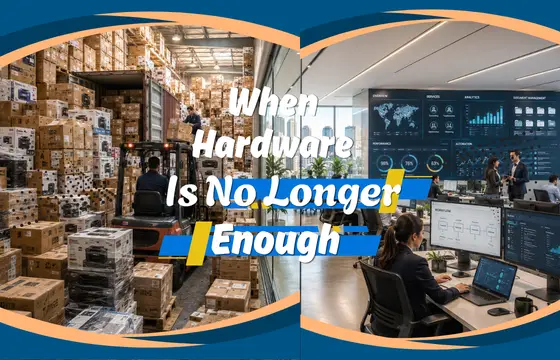
Gustavo Molinatti emphasized that “hardware is no longer enough.”
As James Bsales pointed out in his article, “The value has shifted from the device itself to the data that passes through it.”
Koichi Yoshizuka urges that “If Epson is publicly preparing to become less dependent on printers, aftermarket companies cannot assume that the traditional printer supplies model will remain unchanged for the next decade.”
To Ray Stasieczko, “Dealers and OEMs remain financially tied to models built around high volumes, frequent servicing, and consumables. That model no longer aligns with reality.”
In different ways, these industry leaders are all pointing toward the same transition: the industry can no longer rely solely on hardware sales and consumables-driven growth.
As traditional hardware-based competition becomes increasingly unsustainable, the industry is gradually shifting from pure price competition toward service, workflow solutions, technical support, and long-term customer value. To stay relevant and maintain growth, the imaging supplies industry has to search for new solutions and opportunities, such as service-oriented transformation and AI and robotics adoption.
The future competitiveness of the imaging supplies industry may no longer depend on who sees pricing data faster, but on who creates value beyond pricing.
This October, the annual RemaxWorld Summit will address all these concerns, gathering industry experts and professionals to share first-hand experiences, valuable insights, and unique perspectives.
Be present; get connected and inspired at the summit during the RemaxWorld Expo 2026. Most importantly, join the discussions and explore trends and industry adaptations with industry peers.
 Maggie Wang has been delivering valuable information and updates about the imaging industry through RT channels (website, magazines, and social media platforms) during the past 10 years. She has also extensively covered major events such as the annual RemaxWorld Expo and VIP Imaging Expos through press releases, articles, and interview videos. She can be contacted at <Maggie.Wang@rtmworld.com>.
Related Reading:
- Will The Print Industry Fall To Its Broken Infrastructure?
- Epson’s Move Beyond Printers Signals a Turning Point for the Aftermarket
- The OE Channel Migration: From Hardware Transactions to Digital Transformation
- When Hardware Is No Longer Enough
- You Should Have Seen It When the Copier Was Busy
Comment:
Please leave your comments below on the story “Could Restricting Customs Data Create a Healthier Market?”



Leave a Comment
Want to join the discussion?Feel free to contribute!