 Monday, August 31, 2026

2025 in Review: Key Industry Trends and What to Watch in 2026
This article looks back at 2025 from an individual practitioner’s perspective, examing challenges, trends, and concerns that shaped the industry.
The close of 2025 leaves the printing and document management industry in the midst of a major reconfiguration. It was not a year of explosive growth, but rather one defined by structural decisions, defensive adjustments, and technological bets that will shape the direction of the business in the years ahead. From high-impact corporate moves to tariff pressure and the acceleration of artificial intelligence, the sector seems to have accepted a new reality: volume is no longer at the center of the equation.
Xerox and Lexmark: Consolidation as a Response
Xerox’s acquisition of Lexmark was, without a doubt, the most significant event of the year. Beyond the value of the deal itself, the message is clear: scale, customer base, and services now matter more than hardware alone. Consolidation has emerged as a way to gain efficiency, protect margins, and strengthen capabilities in software, managed services, and vertical solutions.
This move also confirms a trend that has been evident for some time: large OEMs are no longer competing solely for market share but for strategic relevance within their customers’ IT environments.
Tariffs: An Immediate Problem, a Medium-Term Battle
Throughout 2025, tariffs became a constant source of pressure for manufacturers. They directly impacted costs, margins, and planning—especially in a context where the global supply chain remains far from pre-pandemic normality.
However, toward the end of 2025, a different narrative began to take hold: 2026 could be the year of refunds and corrections. Several OEMs expect to recover part of what they paid, whether through regulatory reviews, court rulings, or adjustments in trade policies. This does not mean immediate relief, but it does help explain why many companies chose to endure, adjust, and wait, rather than passing the full impact on to the channel or end customers.
AI and Cloud: From Promise to Real Implementation
If 2023 and 2024 were years of rhetoric, 2025 showed much more concrete adoption of artificial intelligence, automation, and cloud platforms within the printing and document management ecosystem.
AI moved from being an aspirational concept to a practical tool applied to:
- Document workflow automation
- Intelligent document processing
- Advanced analytics of device usage
- Enhanced security and anomaly detection
At the same time, the cloud has solidified its position as the dominant architecture for managed print services, especially in distributed organizations and hybrid work environments.
Security: The Silent Axis
While attention often focuses on AI and costs, security continues to gain weight as both a commercial and technical argument. Printing devices are increasingly recognized as critical points within the corporate network, and OEMs are strengthening their offerings with additional layers of protection, monitoring, and regulatory compliance.
This focus not only responds to a real customer need but also helps reposition printing as an integral part of IT infrastructure rather than a peripheral commodity.
A View from Latin America
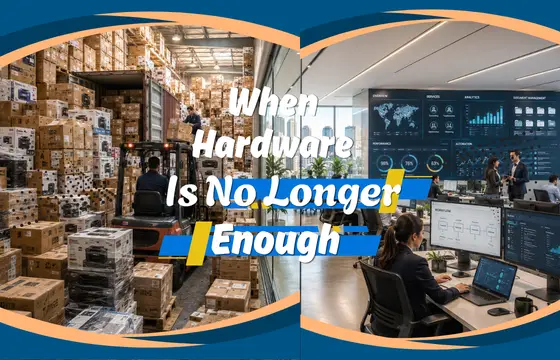
For the printing channel in Latin America, these trends have a very concrete implication: the business ahead cannot be sustained by volume or price alone. OEM consolidation, the effects of tariffs, and the acceleration of AI- and cloud-based solutions will redefine commercial terms, portfolios, and the rules of the game. Those who continue to operate solely as hardware or consumables suppliers will be more exposed to margin pressure and to decisions made outside the region. By contrast, players who add services, support, management, contracts, and a deep understanding of the customer will be better positioned to negotiate, differentiate, and capture value. Adapting is no longer a strategic option—it is an urgent commercial decision.
Less Volume, More Strategy
Looking ahead to 2026, the outlook seems clear:
- OEMs will attempt to recover part of the tariff impact suffered in 2025.
- Investment in AI, cloud, and security will continue—not as optional differentiators, but as basic requirements.
- The business will keep shifting from hardware toward services, software, and integration.
This is not a market revival, but its definitive transformation. Companies that understand this change—and act accordingly—will be better positioned for a future in which printing becomes just one, increasingly smaller, part of a much broader value proposition.
* This article is part of our ongoing “2025 Review & 2026 Outlook” series, featuring insights from industry contributors worldwide.
Related Coverage:
- Global Industry Voices on 2025 Trends and What Lies Ahead in 2026
- Global Industry Voices: 2025 Review & 2026 Message
- 2025 in Review: Key Industry Trends and What to Watch in 2026
- What We Must Focus on in 2026
 Gustavo Molinatti graduated in Architecture from the University of Buenos Aires, Argentina. He is the editor of Guía del Reciclador, the leading Spanish-language media on printer cartridge aftermarket and printing solutions in Latin America. First published in 2002, it has released over 200 editions and organized more than 40 events in countries like Brazil, Mexico, Argentina, Colombia, Venezuela, Chile, Peru, Nigeria, Kenya and UAE. Guía del Reciclador also runs a blog, www.blogdelreciclador.com, and weekly newsletters. You can contact him at gmolinatti@guiadelreciclador.com
Read other articles by Molinatti:
- Market Analyst Shares Key Insights for Latin America in 2025
- Global Logistics and Its Impact on Latin America
- The Growth of Inkjet: New Normal or Temporary Bubble?
- Revealing the True Latino Pioneering Spirit
- Show Me the Color in Latin America
- Remanufacturing Remains Viable in Latin America
- Price Quality or Service – or all Three?
- Vertical Integration in the Latin Aftermarket: the Next Step?
- Adapting to New Normality or a Paradigm Shift?
- Can Latin America Manufacture its own NBCs—and be Profitable?
- HP Blocks Online Sale of Aftermarket Cartridges
- Remembering when Product Sales Increased
- Confronting Market Challenges and Opportunities
Comment:
Please leave your comments below for the story “2025 in Review: Key Industry Trends and What to Watch in 2026.”



Leave a Comment
Want to join the discussion?Feel free to contribute!