 Tuesday, March 17, 2026
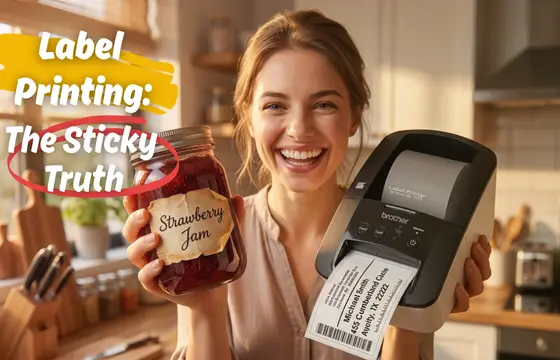
Label Printing: The Sticky Truth
Labels have persisted longer than you might think. At least 300 years. But they are not the same as what they were… even 50 years ago.
Humbling Origins
I can still picture my grandma handwriting labels to stick onto the glass jars containing jams, salt, pepper, herbs, and spices. They were simple, messy, but effective for her kitchen at home.

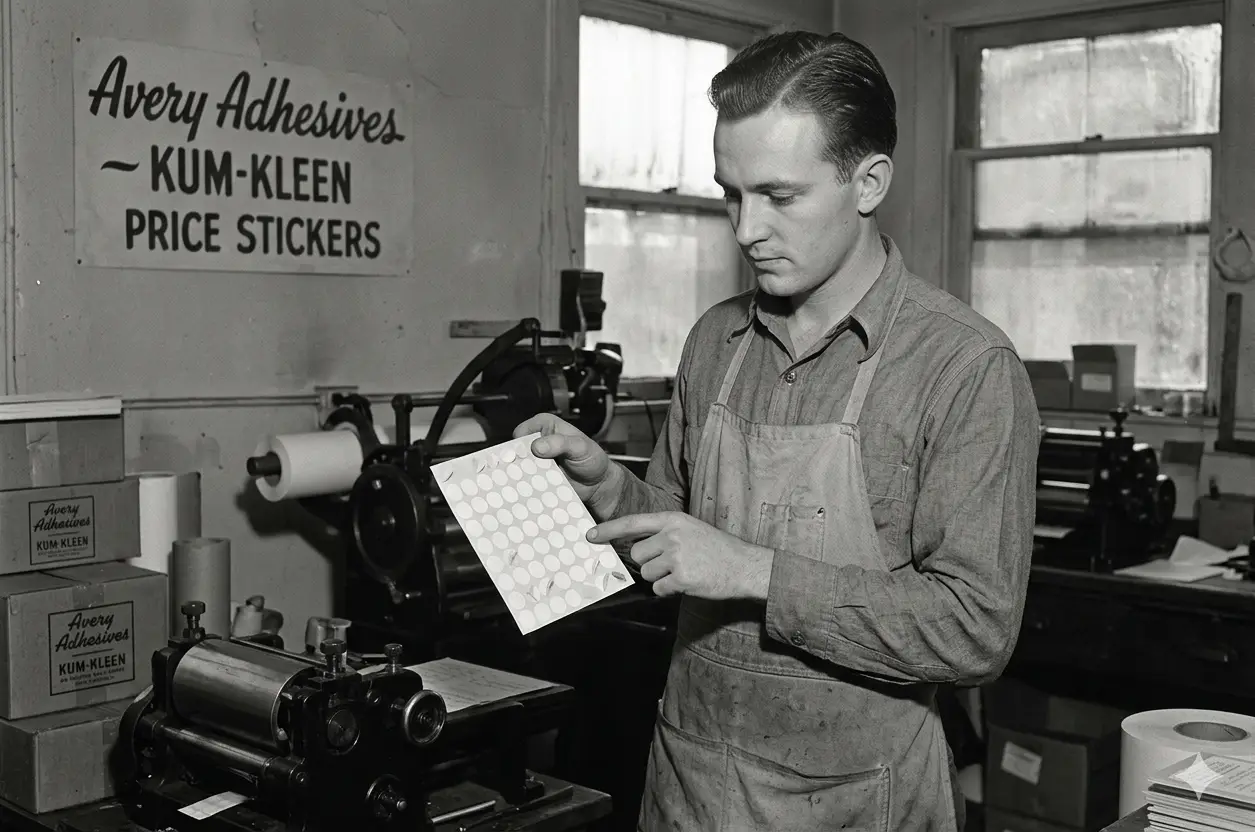
I can only imagine the cheers from thousands of factory workers when R. Stanton Avery’s self-adhesive invention (I am sure you have heard of the Avery label brand) exploded in 1935. He captured 40% of Europe’s market and transformed factories from glue pots to peel-and-stick bliss. And all with blank, circular-shaped labels that could be written on. No more gluing or licking backsides needed!
Pioneers Power Up Printers
Dot-matrix “clunkers” arrived in the 1970s, but it wasn’t until the arrival of thermal printers that the revolution was ignited.
Jack Kilby prototyped direct thermal printing at Texas Instruments in 1965, while SATO Corporation launched the M-2311, the first thermal-transfer shipping label printer, in 1981. It was perfect for durable barcodes on packages.
DYMO developed embossed labels on plastic in 1958, Brother electrified them in 1988, and Zebra’s 1986 models introduced a far more rugged tag solution for warehouses.
These trailblazers turned shipping chaos into scannable precision.
Inkjet and laser printers dazzled offices from around 1985. You could print a sheet of Avery labels on them, but when smartphones and tablets arrived in the early 2000s, office and home printing began to decline as people shared and sent digital files instead of paper.
Labels laughed it off, and printing laser and inkjet labels for jars, files, and packages only grew in demand.
E-Commerce Sparks a Labelling Surge
Label printing has come a long way since handwritten tags 80 years ago. But new technologies were on the horizon. Today, high-tech machines can churn out barcodes faster than a single heartbeat. The chore involving glue pots and stamps was now a booming industry fuelled by online shopping sprees.
Recent Trends
From 2016-2020, print packaging grew at 5.2% annually to USD 286 billion, driven by urbanisation and middle-class expansion in Asia. Industrial packaging hit USD 74.35 billion in 2026 (5.58% CAGR to 2031), while flexible packaging ballooned from USD 270.96 billion in 2023 to an expected USD 373.34 billion by 2030 (4.7% CAGR). The e-commerce and FMCG sectors have fuelled 4-6% annual gains since 2006.
COVID-19 not only spread globally as a deadly virus, but lockdowns also dramatically accelerated home deliveries thanks to online shopping, creating sustained demand for label printing in shipping and packaging.
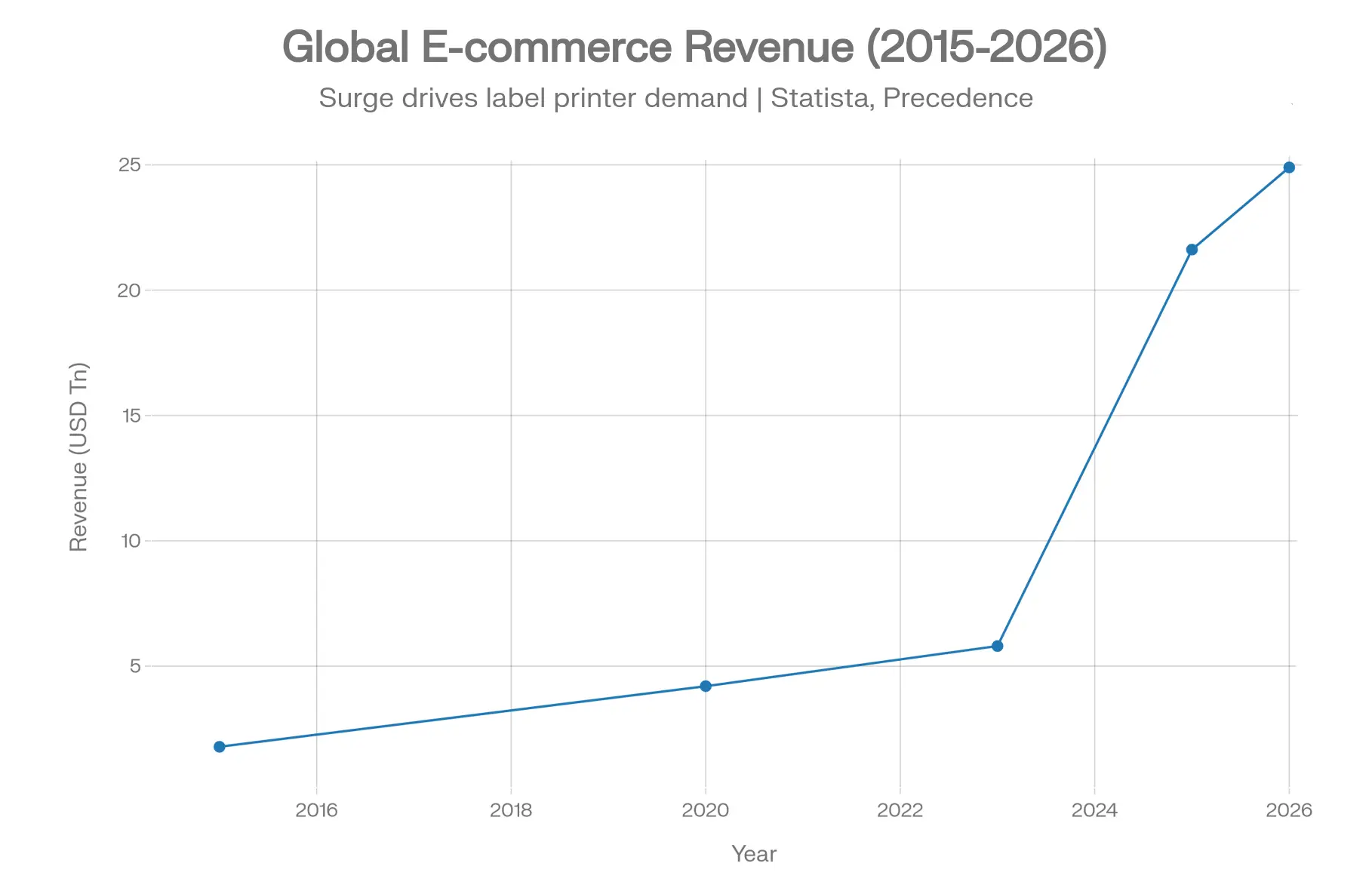
Global e-commerce jumped 25-30% in 2020 (from around USD 3.3 trillion in 2019 to USD 4.2 trillion). Parcel volumes doubled in places like my homeland, Australia, during early lockdowns, overwhelming carriers and spurring demand for tracking labels and contactless operations. Uber Eats, Instacart, and DoorDash food and grocery deliveries soared, all of which require labels.
Habits stuck: 67% of consumers shopped differently post-pandemic, boosting e-logistics and printers for SMBs as well as custom labels. Look how the fortunes of Amazon and Temu have boomed, but they needed fast, efficient label and barcode printing.
| Segment | Base Value | 2026 Value | Projected Peak | CAGR |
| Packaging Printing | USD 244B (2016) | USD 423.53B | USD 640.33B (2035) | 4.7-5.2% |
| Overall Packaging | USD 1T (2010s) | USD 1.32T | USD 1.75T (2035) | 3.16% |
| Industrial Packaging | N/A | USD 74-78B | USD 125B (2033) | 5.58-6.0% |
| Label Printers | USD 2.85B (2018) | N/A | USD 4.67B (2030) | 5% |
With the instant demand for custom labels, TSC, Rollo, and Phomemo joined the party. Sustainability pushes, RFID tracking, and warehouse AI have given rise to app-connected “smart” printers. Digital output? It’s expected to double to 11.2 billion square meters by 2030.
The packaging industry is now driving printing. Packaging printing is expected to soar from US$244 billion in 2016 to US$423.53 billion in 2026, reaching USD 640.33 billion by 2035 (4.7-5.2% CAGR).
Japan and the USA have led innovation, while China rules manufacturing volume with cost-effective thermal units.
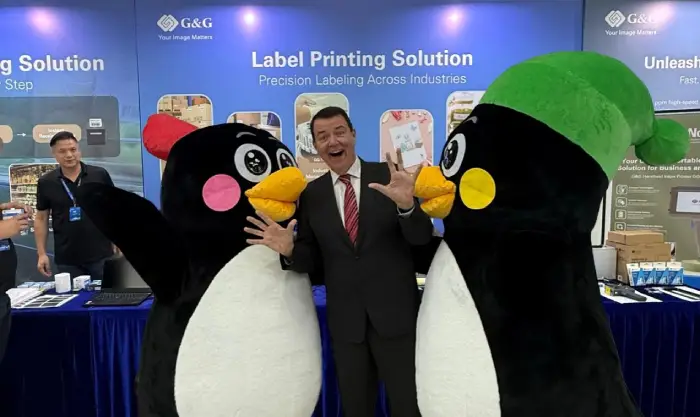
Zhuhai-based Ninestar Corporation (G&G brand), for example, launched its Label Printing Division in 2013, targeting the logistics, manufacturing, and healthcare sectors with thermal printers such as the portable TP-110 and desktop TD-403T. In 2025, G&G showcased label printers as part of its product ecosystem at its Global Partner Conference in Zhuhai, China. I was there and saw it for myself.
In 2026, market leaders include Zebra with 20% share, while 55% of the market is held collectively by Honeywell, SATO (Japan), TSC, and Brother.
We have come a long way from stamped apothecary vials and glued labels to the app-linked wizardry of modern devices, which only require heat, with no toner or ink, to provide hundreds of labels in a single heartbeat. Label printing proves that necessity is indeed the mother of speedy invention.
Next time you stick a barcode on a box, tip your hat to Avery, Kilby and all who followed them! Labels prove that some ideas are too sticky to let go of!
 David Gibbons has 47 years of experience, knowledge, and skills in business (management, consultancy, strategic planning) and communication (teaching, event management, fundraising, journalism, broadcasting and new/digital media—social, website, app development). He started and ran a successful cartridge remanufacturing business in Sydney and was also the Executive Officer of the Australasian Cartridge Remanufacturers’ Association for 7 years.
Until 2024, Gibbons has been a director in RT Media in Zhuhai, China, responsible for strategic planning, senior management, event planning, marketing, broadcasting and magazine publishing on behalf of the global imaging supplies industry. He is certainly aware of the challenges of remanufacturing in China.
His other blogs include:
- Winter is Coming for the Imaging Industry
- Call on ETIRA to Reveal More About Non-compliant Cartridges
- How Trade and Debt Contribute to Global Tensions
- Why Right to Repair is Not So Straightforward
- Some Quick Ink Facts I Bet You Never Knew
- Anger Over Exaggerations Lies and Deceit
- Invention—”Doing Our Part in Order to Create a Better Future”
- Einstein: Discovering the Impossible
- The Challenges of Remanufacturing in China
- Can the Chinese Really Deliver What the Rest of Us Want?
Comment:
Please add your comments below about this article, “Label Printing: The Sticky Truth.”



Leave a Comment
Want to join the discussion?Feel free to contribute!