 Sunday, April 12, 2026
What do Industry Experts Anticipate in 2026
What do Industry Experts Anticipate in 2026
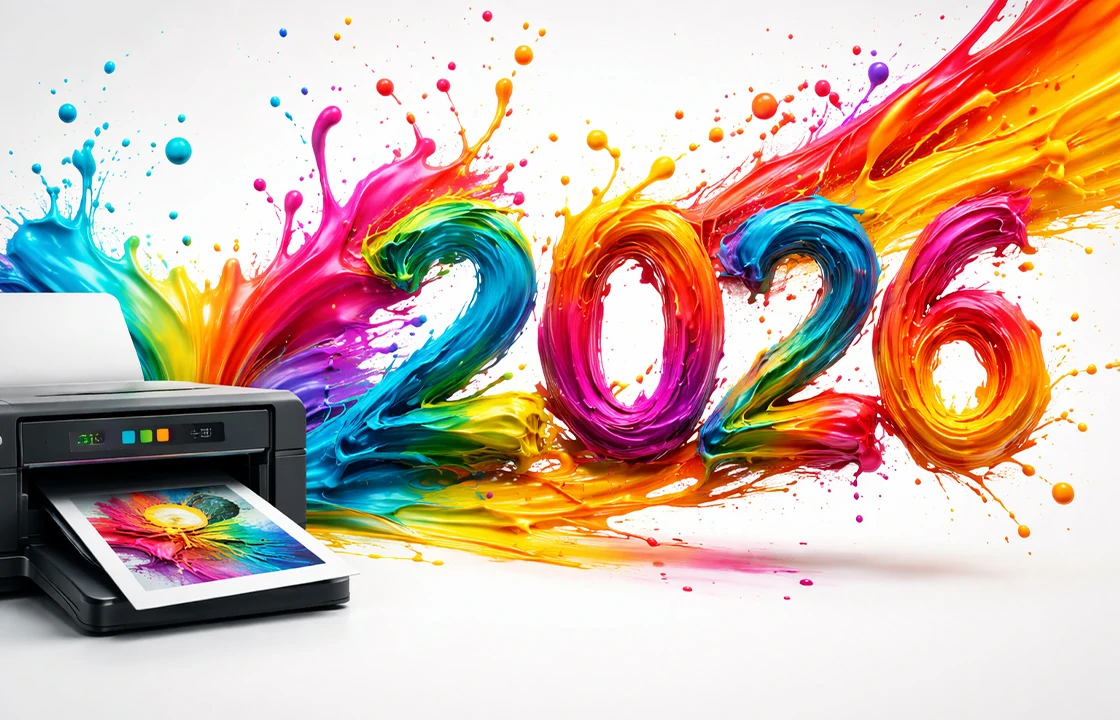
Insights from Printweek’s New Year Predictions survey indicate that 2026 will be defined by faster digital adoption, deeper automation, sustainability-driven investment and a growing effort to reposition print as a high-value, data-enabled communications channel.
Contributors from across manufacturing, finance, technology and trade bodies broadly agree that efficiency, profitability and relevance will dominate strategic priorities for printers in the year ahead.
Inkjet momentum and digital dominance
Digital print—particularly inkjet—is expected to continue gaining share across commercial, publishing, packaging and large-format applications. Survey respondents point to ongoing migration from offset, driven by shorter runs, faster turnaround times and the need to unlock higher-value work.
High-speed cut-sheet, web-fed and B2 inkjet presses are seen as core growth platforms, while large-format inkjet continues to attract traditional litho businesses seeking improved margins. Versatility is a recurring theme, with demand rising for equipment capable of handling rigid and flexible media, specialty colours and creative finishes.
Automation everywhere, AI at the core
Automation emerges as one of the strongest shared expectations for 2026. Contributors anticipate broader deployment of AI-driven tools across production, workflow management and customer interaction, aimed at reducing manual intervention, improving predictability and offsetting labour constraints.
Connected workflows—linking presses, finishing, software, data and client-facing systems—are increasingly viewed as essential infrastructure. Barcode-driven finishing, end-to-end workflow software, intelligent colour management and API connections to eCommerce and client portals are cited as practical routes to greater efficiency and scalability.
Beyond operational gains, AI and automation are also seen as enablers of new business models, including outcome-based selling, print-on-demand and integrated print-to-digital journeys.
Print meets data, marketing and measurement
A consistent message across the survey is that print’s future lies in deeper integration with digital channels. Respondents highlight growing opportunities where print connects directly with CRM systems, marketing automation platforms and performance analytics.
Data-driven personalisation, smart embellishment and tactile finishes informed by response metrics are positioned as ways for print to deliver measurable impact. Linking print to digital experiences—through QR codes, vouchers and personalised triggers—allows print to function as an intelligent, accountable medium rather than a standalone product.
Several contributors also stress the need for the industry to speak more confidently about print’s strengths, particularly its ability to command attention, build trust and influence behaviour.
Sustainability pressure, profitability reality
Sustainability remains a central concern heading into 2026. Printers are expected to face continued pressure to reduce energy use, waste and environmental impact while complying with evolving regulations such as EUDR and EPR.
Energy-efficient equipment, eco-friendly substrates and transparent reporting are increasingly viewed as baseline requirements. At the same time, rising employment and operating costs mean sustainability initiatives must also support commercial performance.
Lower total cost of ownership, scalable investment models and clear guidance from suppliers are therefore seen as critical to enabling sustainable and profitable growth.
Partnership over product
Collaboration is repeatedly highlighted as a differentiator for the year ahead. Survey respondents argue that suppliers should act less as vendors and more as strategic partners—providing training, workflow insight, application development and long-term support.
Access to finance is also seen as an important enabler, with government-backed schemes and tax incentives helping to support investment in automation, sustainability and new technology. Close cooperation between manufacturers, financiers and industry bodies is viewed as essential to maintaining momentum.
Related:
- AI Expected to Reshape Document Workflow in 2026
- European SMEs Push AI Adoption Amid Economic Headwind
- EU Moves Toward Binding Reuse Targets in Printing Sectors
- Print Buyers Push Sustainability From Ideal to Expectation
- India Braces for Anti-Dumping Duty on Mono-Toner Cartridges
Comment:
Please leave your comment below about the news: What do Industry Experts Anticipate in 2026.




Leave a Comment
Want to join the discussion?Feel free to contribute!