 Tuesday, September 1, 2026

Industry View┃What Will Be the Biggest Disruption Facing the Imaging Industry in 2026?
Every year, the imaging industry talks about change. But 2026 may represent something fundamentally different.
Ahead of its recent call for the 2026 Market Outlook Survey, RTMworld invited several industry leaders from different regions and segments of the value chain to answer one simple question:
What do you think will be the biggest disruption facing the imaging industry in 2026?
While the experts approached the question differently, several clear themes emerged. Together, they paint a picture of an industry facing disruption on multiple fronts: from mindset and business models to supply chains, sustainability, and geopolitical change.
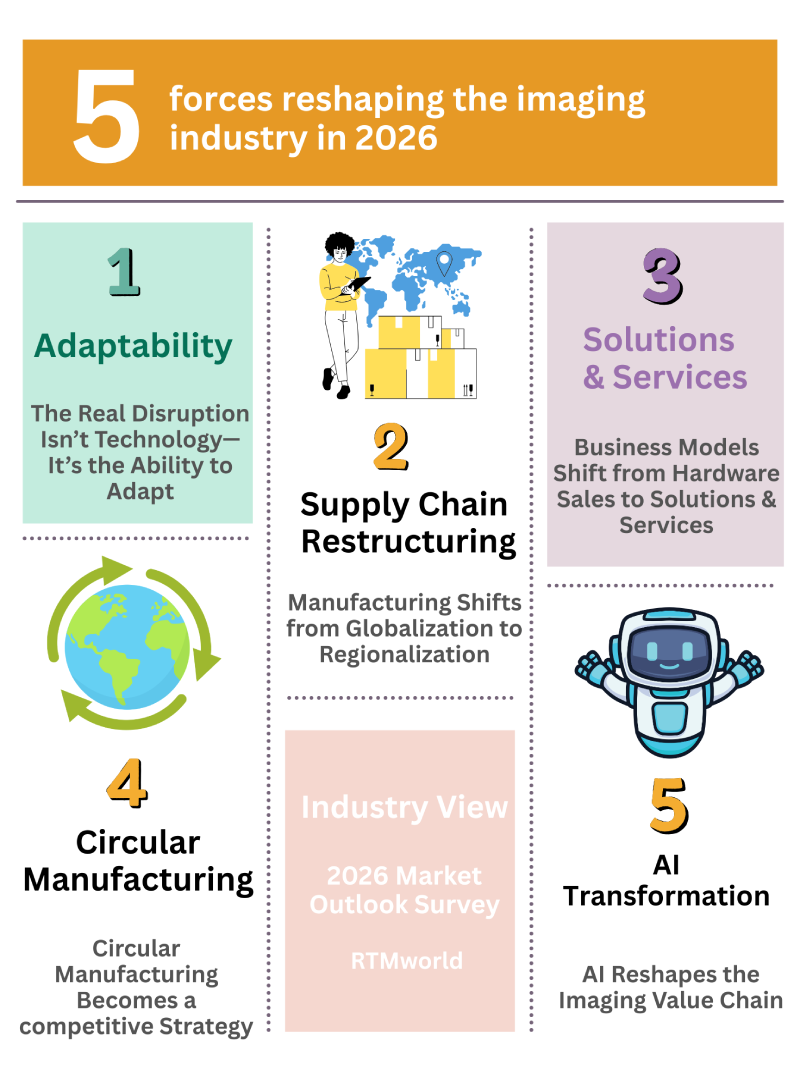
1. The Real Disruption Isn’t Technology—It’s the Ability to Adapt
The biggest challenge in 2026 may not be the changes happening within the industry, but rather the industry’s ability to respond to them.
US-based industry consultant Ray Stasieceko points out that “the industry remains risk-averse to protect what’s comfortable, rather than journeying through discomfort in search of continued relevance.”
Latin America-based Gustavo Molinatti emphasized that “there is a widening gap between talking about change and actually changing.”
Together, their comments highlight a common concern: companies that hesitate, delay decisions, or continue relying on outdated business models may find themselves falling behind. In a market shaped by AI, geopolitical uncertainty, sustainability, and changing customer expectations, adaptability is becoming a competitive advantage rather than simply a management skill.
2. Manufacturing Shifts from Globalization to Regionalization
For decades, manufacturers built global supply chains around one primary objective—cost efficiency. However, geopolitical tensions, tariffs, trade policies, and growing localization requirements are reshaping that model.
India-based Dhruv Mahajan observed that “a single global manufacturing model is giving way to a more regionalized world, where business strategy is increasingly shaped by government policy as much as by technological innovation.”
This shift means that supply chain resilience is becoming just as important as operational efficiency. Manufacturers and distributors are increasingly expected to diversify sourcing, strengthen regional production capabilities, and build more agile supply networks that can respond quickly to geopolitical, regulatory, and market changes without compromising customer service or profitability.
The implication is clear: competitive advantage will increasingly depend not only on product innovation but also on where products are made, how supply chains are structured, and how quickly businesses can adapt to an increasingly uncertain global environment.
3. Business Models Shift from Hardware Sales to Solutions & Services
As print volumes continue to decline, relying solely on hardware sales is no longer a sustainable growth strategy. More importantly, customer expectations are changing. Rather than simply purchasing printers, businesses are increasingly looking for integrated solutions that improve productivity, reduce operating costs, and simplify device management.
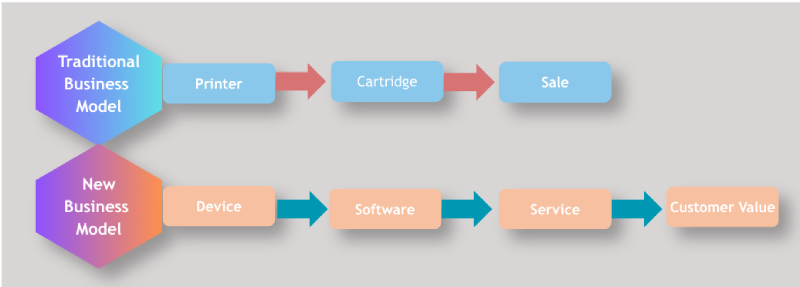
Saudi Arabia-based Oussama Nasr noted that “customer expectations for channels have transformed from traditional hardware sales toward integrated solutions and managed services.”
As traditional office printing declines, companies are increasingly exploring adjacent growth markets.
Ethiopia-based Wondimage Teka believes that the most resilient players in 2026 will be those “diversifying away from standard office consumables and moving into high-growth, specialised print niches, such as industrial packaging, digital textiles and subscription-based automatic replenishment services.”
For manufacturers, distributors, and service providers, this shift requires a fundamental rethink of their business models. Future growth will increasingly depend on value-added services, software, automation, and managed print solutions rather than hardware sales alone. The companies that can deliver business outcomes, not just products, will be better positioned to remain competitive.
4. Circular Manufacturing Becomes a Competitive Strategy
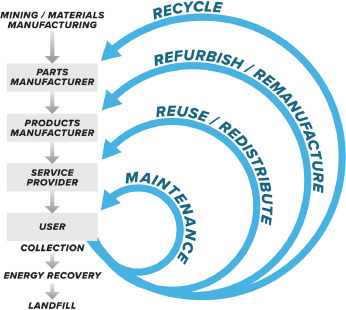 Sustainability is no longer just about reducing environmental impact. It is becoming a manufacturing strategy.
South Africa-based Stuart Lacey pointed out that “there will be a transition from a traditional linear manufacturing model to circular manufacturing, as governments, organizations, and customers worldwide are increasingly expecting products to be repaired, remanufactured, reused and fully traceable throughout their lifecycle.”
This shift requires businesses to invest in reverse logistics, digital traceability, and enhanced local manufacturing capabilities. It also calls for greater collaboration across the value chain to build circular manufacturing ecosystems that extend product lifecycles, reduce waste, and create long-term value.
Beyond environmental considerations, sustainability is also becoming a regulatory requirement. Wondimage Teka notes that OEM firmware lockouts are increasingly coming into conflict with right-to-repair legislation, Extended Producer Responsibility (EPR) requirements and carbon disclosure regulations. As a result, aftermarket suppliers can no longer compete on price alone. Success will increasingly depend on delivering high-quality, compliant remanufactured products and developing smarter chip technologies that can meet evolving regulatory and technical requirements.
Increasingly, the industry’s future will be shaped not only by technological innovation but also by how companies balance intellectual property protection, regulatory compliance, and the growing demand for repairability and circularity.
5. AI Reshapes the Imaging Value Chain
Artificial intelligence is no longer an emerging technology. It is rapidly becoming an integral part of how imaging businesses operate. From product development and manufacturing to predictive maintenance, inventory management, and customer service, AI is reshaping the entire value chain.
India-based Swapan Roy believes that the real challenge is not “whether AI will reshape the imaging industry, but how effectively businesses can leverage it.”
Rather than replacing traditional business models, AI offers companies new opportunities to improve operational efficiency, automate routine processes, and deliver smarter, more responsive services. Businesses that integrate AI strategically into their operations will be better positioned to build a more resilient, efficient, and competitive future.
AI is not only transforming business operations but is also changing customer behavior. Wondimage Teka points out that “as organizations increasingly adopt AI-driven workflow automation and digital documentation, traditional office print volumes are expected to continue declining,” accelerating the industry’s shift towards new applications and service-based business models.
This is just the beginning of the conversation.
The same questions, and many more, will be explored at the RemaxWorld Expo in October. The annual RTMworld Imaging Summit held during the expo will provide industry leaders from around the world with the opportunity to discuss how businesses can navigate disruption, identify new opportunities, and reshape the future of the imaging channel.
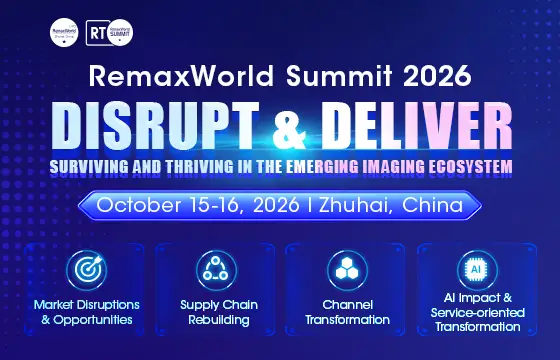
While disruption brings uncertainty, it also creates new possibilities. The emerging growth opportunities behind these market shifts will be explored in our upcoming 2026 market forecast coverage.
Join us in Zhuhai this October as the industry comes together to discuss what’s next for the imaging channel.
About RemaxWorld Summit
As one of the key events at RemaxWorld Expo, RemaxWorld Summit 2026 will bring together manufacturers, distributors, industry experts, and market analysts from around the world to explore the forces reshaping the imaging industry. Through keynote presentations, panel discussions, and expert insights, the summit will examine market disruption, AI-driven transformation, evolving channel strategies, supply chain resilience, and emerging business opportunities.
To learn more about the RemaxWorld Summit 2026, its speakers and agenda, return to the RTMworld.com website for updated announcements.


Leave a Comment
Want to join the discussion?Feel free to contribute!