 Sunday, September 6, 2026
Product Design & the Customer Experience
Product Design & the Customer Experience
Keeping that customer coming back
Introduction
Ask most people what product design means and they’ll point to the object itself — its shape, its function, how it looks on a shelf or in a photograph. But the most successful products in the world are successful because their designers understood something deeper: that design doesn’t stop at the edge of the product. It runs through every single interaction a customer has, from the moment they first hear about it to the moment they throw away the box and every moment in between.
Think about the last time you bought something that genuinely impressed you. Chances are it wasn’t just the product that stuck with you. It was the experience of it and the way it was presented, how easy it was to get started, how it made you feel about your decision to buy it. That total experience is design. The companies that get it right understand that every touchpoint—the packaging, the quality, the price tag, the instructions, and the warranty is an opportunity to reinforce everything they’ve worked so hard to build.
Crucially, every one of those touchpoints also has a direct impact on what happens after the sale. Poor design decisions don’t just frustrate customers in the moment, they generate returns, support calls, negative reviews, and lost repeat business which is a costly part of any business. In a category like printer cartridges, where the customer will need to reorder again and again, the design of your product and its entire experience is not just a marketing concern. It is your single greatest lever for customer retention.
I hope by reading this article, you develop a sharper perspective on your printer cartridge product. Yes, it is a consumable item and is generally regarded as more of a need than a want. But look at it from the perspective of your potential customer: are you truly fulfilling what they need, and are they going to come back and buy from you again?
Branding — It’s More Than a Logo
Most people think branding is what something looks like. In reality, it’s what something feels like. Your brand is the personality behind your product and the tone of voice on your packaging, the colour psychology in your logo, the emotion a customer feels when they first pick it up. A great brand creates instant recognition and trust, and it should run consistently through every single element of your product’s design, from the weight of the cardboard box to the font on the warranty card.
Branding is not a layer you apply at the end, it is the foundation everything else is built on. And it has a direct relationship with retention. When a customer can instantly recognise your product on a shelf or in a search result, and when that recognition carries a positive association from their last experience, they are far more likely to come back. Inconsistent or weak branding, by contrast, means the customer has to re-evaluate their decision every time they reorder. That is a retention risk built into your design from the very start.
Product Quality
Quality is the promise your product makes and either keeps or breaks. In design terms, quality isn’t just about durability—it’s about how the product feels in the hand, how intuitively it works, and whether it performs exactly as the customer expected when they bought it. Perceived quality is just as important as actual quality. A product that works perfectly but feels cheap or does not fit well will lose customers.
Poor quality has a compounding after-sales cost that many businesses underestimate. A defective cartridge doesn’t just mean a return—it means a customer contact, a replacement, a review, and very likely a lost future order. If you are sourcing from multiple factories, do you track your defect rate? Do you have quality control at the factory or use inspection services? Do you invest in a higher-specified product, or do you always buy at the lowest price? The latter may protect your margin today, but it erodes your brand and drives up your after-sales costs over time.
Product Packaging
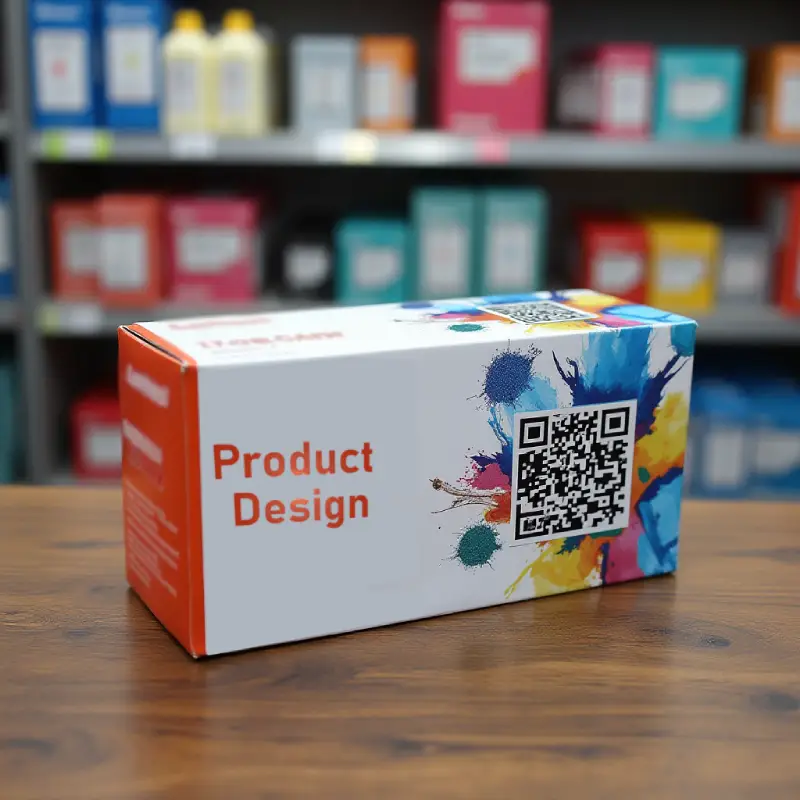 Packaging is often the first physical handshake between your product, your company and your customer. On a retail shelf, you have roughly two seconds to earn someone’s attention, and your packaging is doing all the talking. Good packaging design communicates what the product is and why it’s worth buying without a single word of explanation needed.
But packaging also plays a powerful role in reducing after-sales problems. Clear compatibility information on the front of the box—the printer model, the page yield, whether it works with a recent firmware version — reduces the single most common cause of returns: the customer bought the wrong product or had the wrong expectation. Every element of information you make easy to find on the packaging is a support call you will not receive and a return you will not process. Think carefully about what your customer needs to know to make a confident purchasing decision, and make it impossible to miss.
The Unboxing Experience
Closely related to packaging but deserving its own conversation, the unboxing experience has become one of the most powerful and underestimated marketing tools available to product designers. Customers share unboxing moments on social media, write about them in reviews, and remember them long after the product itself becomes familiar.
There are YouTube channels with millions of subscribers built entirely around unboxing videos, and Apple products appear in them constantly. Every layer the customer peels back is an opportunity, and the best brands choreograph that experience as deliberately as they design the product itself.
Your branded toner or ink cartridges will never be expected to match the Apple experience. But the question is still worth asking: what does your customer expect when they open the box? A positive unboxing experience — even a simple one, executed with care — signals quality, reinforces brand perception, and gives the customer a moment of confidence in their purchase. That confidence is the foundation of a repeat order. A disappointing or careless unboxing, by contrast, introduces doubt before the product has even been used.
Product Instructions
Instructions are one of the most undervalued areas of product design and one of the most damaging when they go wrong. A customer who cannot figure out how to use your product does not just return it or throw it away—they leave a negative review and tell others. We should not assume that the average consumer knows how to install a toner or ink cartridge. The reality is quite different: the average home or office user has limited experience with the process.
This is also one of the most direct links between design and after-sales issues. Poor, unclear, or missing instructions are a leading cause of incorrect installation, product damage, and returns. They generate support contacts, frustrate customers, and put the product in a bad light, even when the product itself is perfectly fine. A well-designed instruction set—clear, visual, and written for someone who has never done this before—can eliminate a significant proportion of your post-sale problems at almost no additional cost.
Consider: Does your product have instructions at all? Does it include a QR code linking to detailed instructions, FAQ or video installation guide? If your product is susceptible to firmware update issues, do you explain that clearly? And are those instructions printed at a size a customer can actually read without a magnifying glass? Every one of these questions has a direct relationship with your return rate, your customer satisfaction, and whether that customer comes back.
Warranty
A warranty is a design decision in disguise. The length, terms, and clarity of your warranty communicate something powerful about how much confidence you have in your own product. A strong, simple, no-fuss warranty builds trust before the customer has even experienced a problem.
Brands that treat warranty purely as a legal obligation miss the opportunity to use it as a genuine brand differentiator and a retention tool. If the OEM offers 12 months, what can you offer that represents a credible, sustainable commitment to your customer? A generous warranty reduces the perceived risk of switching from the OEM brand, which is often the single biggest barrier to winning a new customer. And for existing customers, a warranty that is honoured quickly and without friction is one of the most powerful drivers of repeat business. It tells the customer that you stand behind what you sell.
Selling Price
Before a customer reads a single word about your product, the price tells them a story about quality, exclusivity, and value. Aftermarket printer cartridges are expected by customers to be priced below the OEM brand. That expectation creates a pricing corridor you need to understand and position within.
A generic or neutral box signals a low-cost alternative, and customers will price it accordingly. A branded product—particularly one with a track record of quality—has more flexibility. A well-known brand can command a higher price precisely because its brand perception does work that the price tag cannot do alone. Pricing is therefore not just a commercial decision; it is a design signal. Price too low and you erode the credibility of everything else you have built. Price appropriately, backed by genuine quality and a strong brand experience, and price becomes part of your retention strategy.
How Easy Is It to Find?
A brilliant product that nobody can find is a failed product. Findability encompasses everything from retail shelf placement and point-of-sale design to search engine visibility and social media presence. In physical retail, eye-level placement and clear signage are design problems. Online, it is about product photography, descriptions, the design of your digital storefront, and how easily that storefront can be discovered.
If your brand can only be found in one store or on one platform, you are limiting both acquisition and retention. A customer who wants to reorder but cannot easily find your product in the channel they prefer will simply buy something else. Findability is not just a marketing issue — it is a design issue, and it has a direct impact on whether customers who had a good experience with your product are able to act on that experience and come back.
Margins and the Cost of Design Decisions
Every design decision has a cost implication, and every cost implication affects your margin. The choice of material, the complexity of a mould, environmentally friendly or glossy packaging, and the thickness of your carton—all of these land somewhere on a balance sheet. The temptation is always to cut costs wherever the customer cannot directly see them. But the hidden costs of poor design decisions—returns, support contacts, negative reviews, and lost repeat orders — rarely appear on the same spreadsheet as the savings. Accounting for after-sales costs as part of your design decision-making will almost always reveal that investing more in quality, clarity, and experience delivers a better return than cutting those costs.
Sustainability and Materials
Sustainability has moved from a talking point to a genuine customer expectation, particularly among younger buyers. The materials you choose—for the product itself and its packaging—communicate your brand’s values loudly. Does your brand use environmentally friendly packaging? Do you offer a recycling solution for your own product? And critically, does the customer know? Sustainability credentials that are invisible to the customer deliver no brand benefit. Make them visible, make them easy to understand, and they become part of the reason a values-aligned customer chooses you—and stays.
Accessibility
Accessible design is good design. A product that can only be used comfortably by people with full dexterity, perfect vision, and a high literacy level is a product that is excluding potential customers and failing in its core purpose. Accessible packaging, clear labelling, and easy-to-follow instructions serve every customer—and they disproportionately benefit the customers most likely to feel underserved by other brands. That is both the right thing to do and a genuine brand differentiator.
How Easy Is It to Reorder?
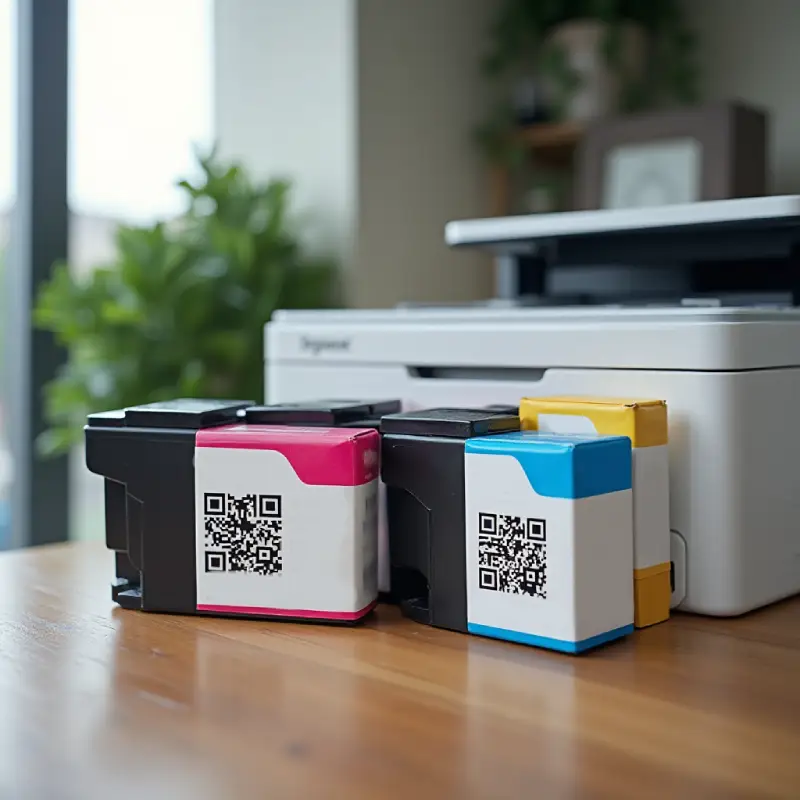 Once the customer has used your product and it is exhausted, the design of your reorder experience determines whether you keep them or lose them. This is the moment of highest intent—the customer knows they need a replacement, they have a product they were satisfied with, and they are ready to make a purchase. How you design for that moment is one of the most direct expressions of your retention strategy.
Is there a simple way to reorder? Is there a QR code or digital link on the cartridge, the packaging, or a reorder card inside the box that takes the customer directly to your product page? Have you thought about whether your packaging survives the life of the product so that the reorder details are still accessible when the customer needs them? Every barrier between a satisfied customer and their next order is a point of potential loss. Remove those barriers by design, and retention becomes a natural outcome of the experience you have built.
Conclusion
In a world where printer cartridges are a commodity—where OEM manufacturers dominate the market and your competitors can and will sell a comparable product at a lower price—product design and the customer experience are your real-world difference.
But the most important shift in thinking this article asks you to make is this: design is not just about winning the first sale. Every decision you make, from the quality of the product itself to the clarity of the instructions, from the unboxing experience to the reorder link on the box, has a direct impact on whether that customer comes back. After-sales problems are largely design problems in disguise. Brand perception is built or eroded by the sum of every interaction. And customer retention — the engine of any sustainable business — is the result of getting all of it right, consistently, every time.
Your product design is not a cost. It is your competitive advantage.
About Author
 Shane Foreman has spent over twenty-five years doing what he loves—working at the heart of the imaging industry as a technical and product specialist. He’s the mind behind two well-known industry tools, Testmagic and Trakmagic, and when he’s not solving industry problems, he’s busy creating software and game apps. Shane is someone who simply can’t stop building things and creating unique solutions to challenges.
shane@level49.com.au
https://www.linkedin.com/in/shane-foreman-9994a769/

Leave a Comment
Want to join the discussion?Feel free to contribute!