 Friday, July 24, 2026
Beyond the Printer: Why 2026 Could Mark the Beginning of a New Imaging Industry
For decades, our industry has been remarkably resilient. We’ve navigated the transition from analog to digital, survived the paperless office predictions of the 1990s, weathered recessions, supply chain disruptions, and more recently, geopolitical uncertainty. Yet, despite every challenge, the global imaging industry has continued to adapt and reinvent itself.
I believe 2026 will be remembered as another pivotal year—but for a very different reason.
The biggest disruption facing our industry is unlikely to be a revolutionary printer, a new toner formulation, or even another breakthrough in print quality. Instead, it is the convergence of artificial intelligence, digital workflows, and a fundamental change in what customers expect from their technology partners.
From my perspective in the United States, AI is beginning to reshape not only how businesses use documents, but also how they make purchasing decisions. Organizations are increasingly using AI to summarize contracts, automate document processing, classify invoices, search technical manuals, and support customer service. Many of these activities once generated significant print volumes. Today, they are increasingly handled digitally.
That doesn’t mean printing is disappearing. Far from it.
Print remains an essential business process in healthcare, manufacturing, government, education, logistics, legal services, and countless industrial applications. What is changing is the role that print plays within a much broader information ecosystem. Customers are no longer looking simply for reliable hardware. They are looking for intelligent workflows that integrate paper and digital information securely, efficiently, and with minimal human intervention.
Industry analysts are reaching much the same conclusion. Recent research points to four converging forces reshaping the market: declining office print volumes, changing workforce expectations, hardware commoditization, and growing sustainability requirements. Increasingly, competitive advantage is shifting toward software, cloud services, automation, and AI-enabled business processes rather than hardware specifications alone.
This changing landscape also highlights another important development.
For many years, discussions about Chinese manufacturers focused largely on manufacturing cost and production capacity. That conversation has changed dramatically.
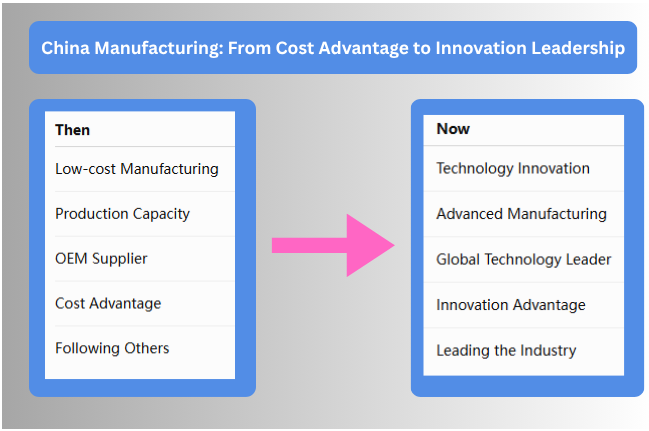
Today, companies throughout China are investing heavily in research, advanced manufacturing, automation, materials science, software, and artificial intelligence. Many are no longer following established technology leaders—they are becoming technology leaders themselves. Innovation is occurring at an impressive pace, supported by highly integrated supply chains, engineering talent, and an increasingly sophisticated domestic market.
From a U.S. perspective, this represents one of the most significant competitive shifts our industry has experienced in decades.
Rather than competing primarily on price, leading Asian manufacturers are increasingly competing on innovation, product development, manufacturing efficiency, and speed to market. This evolution benefits the entire industry by accelerating technological progress and expanding customer choice.
At the same time, geopolitical realities continue to reshape global supply chains. Tariffs, export controls, regional manufacturing strategies, and customer concerns about supply resilience are now permanent considerations rather than temporary disruptions. Companies are redesigning sourcing strategies, diversifying manufacturing locations, and building greater flexibility into their operations.
These changes present challenges, but they also create opportunities.
Perhaps the most important question every company should be asking is no longer, “How do we sell more printers?” Instead, it may be, “How do we become more valuable to our customers?”
That subtle difference changes everything.
Around the world, we are already seeing dealers, distributors, and manufacturers expanding into managed IT services, workflow automation, cloud document management, cybersecurity, analytics, and AI-assisted support. Industry research suggests the buying decision is no longer confined to procurement and IT departments; business leaders responsible for productivity, digital transformation, and information management are playing an increasingly influential role.
In many respects, our industry is evolving from selling devices to delivering business outcomes.
Artificial intelligence is accelerating this transition. AI can improve predictive maintenance, optimize inventory, enhance technical support, automate customer service, improve quality control, and simplify document workflows. These capabilities create value well beyond the printed page.
Interestingly, this transformation doesn’t diminish the importance of imaging—it expands it.
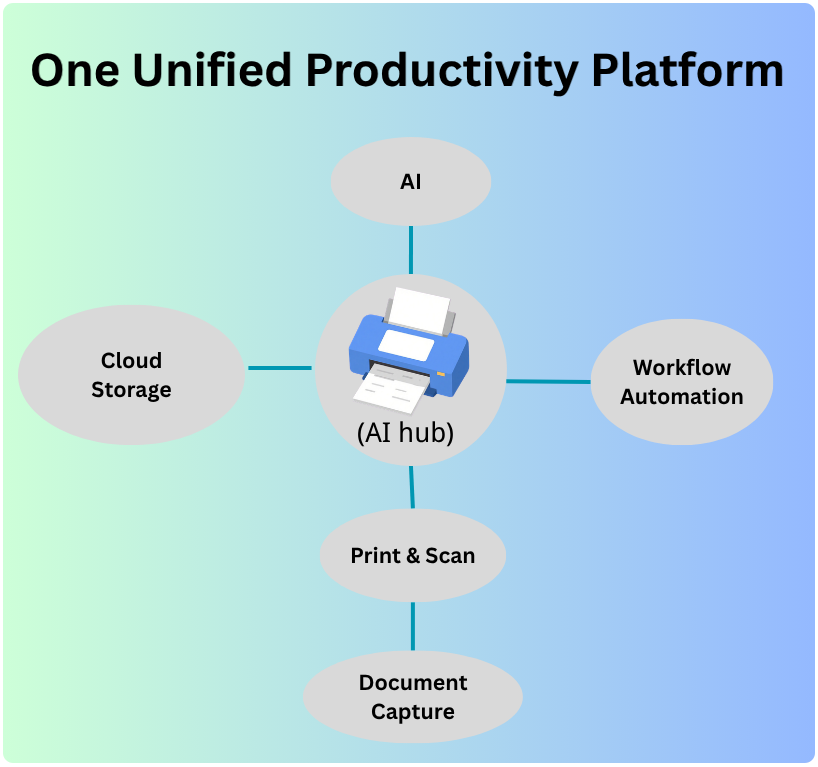
The printer becomes an intelligent endpoint within a connected information environment. Print, scan, capture, cloud storage, workflow automation, and AI become integrated components of a single, unified productivity platform, rather than separate technologies.
For companies across China and Southeast Asia, this may represent one of the greatest opportunities of the coming decade.
The region already possesses exceptional manufacturing capability, deep engineering expertise, and increasingly strong software development resources. Combining those strengths with AI-enabled services and customer-focused innovation positions many Asian companies to help define the next chapter of the imaging industry—not simply participate in it.
Our industry has always adapted to change.
The companies that prosper in the years ahead will not necessarily be those that manufacture the fastest printer or the lowest-cost cartridge. They will be those who understand a much larger truth: customers are no longer buying print—they are buying productivity, efficiency, security, and intelligent business solutions.
That is where the future of imaging now lies.
And I believe that the future has already begun.
The same questions, and many more, will be explored at the RemaxWorld Expo in October. The annual RTMworld Imaging Summit held during the expo will provide industry leaders from around the world with the opportunity to discuss how businesses can navigate disruption, identify new opportunities, and reshape the future of the imaging channel.
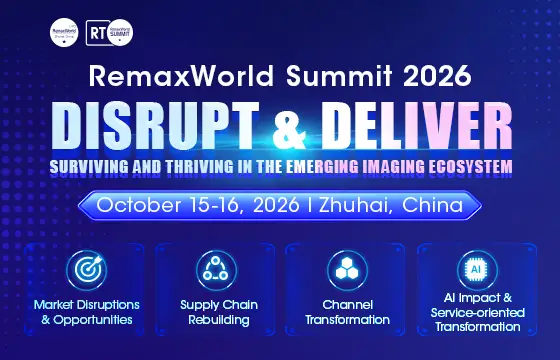
While disruption brings uncertainty, it also creates new possibilities. The emerging growth opportunities behind these market shifts will be explored in our upcoming 2026 market forecast coverage.
Join us in Zhuhai this October as the industry comes together to discuss what’s next for the imaging channel.
About RemaxWorld Summit
As one of the key events at RemaxWorld Expo, RemaxWorld Summit 2026 will bring together manufacturers, distributors, industry experts, and market analysts from around the world to explore the forces reshaping the imaging industry. Through keynote presentations, panel discussions, and expert insights, the summit will examine market disruption, AI-driven transformation, evolving channel strategies, supply chain resilience, and emerging business opportunities.
To learn more about the RemaxWorld Summit 2026, its speakers and agenda, return to the RTMworld.com website for updated announcements.
About the Author
 Graham J. Galliford is a world-renowned consultant to the imaging industry. His work has encompassed the technology of all types of printing products but has been focused on toner-based printing technology since 1974. He founded Galliford Consulting & Marketing, a techno-commercial consulting business concerning toner-based imaging processes, in 1994. The firm’s particular emphasis is on digital printing with electrostatic toner.
Operating from a unique facility for R&D on digital printing materials his business has completed many projects concerning the formulation, manufacture, application and marketing of these products. Galliford has been a regular speaker at conferences in North America, Europe and Asia on all aspects of the digital printing and the toner business from technology to marketing to manufacturing. He has made over 80 presentations to industry gatherings over the last 30 years, including seminars on digital printing technologies and chemically prepared toner technology and markets. He can be contacted by email at graham@ gallifordconsulting.com
Related:
Industry View┃What Will Be the Biggest Disruption Facing the Imaging Industry in 2026?
Comment:
Please leave your comments below for the story “Beyond the Printer: Why 2026 Could Mark the Beginning of a New Imaging Industry.“




Leave a Comment
Want to join the discussion?Feel free to contribute!