 Tuesday, August 11, 2026
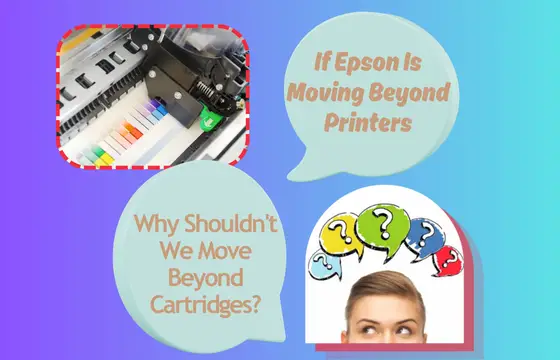
If Epson Is Moving Beyond Printers, Why Shouldn’t We Move Beyond Cartridges?
For many years, the imaging aftermarket followed a familiar model. OEMs manufactured printers and original consumables. Aftermarket companies supplied remanufactured and compatible alternatives. Dealers, distributors, and e-commerce businesses connected products to end-users.
QRIE grew within that ecosystem. Our business was built around importing, distributing, and selling compatible ink and toner products throughout Japan.
Over the past several years, however, we began asking a different question—not how to sell more cartridges, but where our printing knowledge could create new value.
That question eventually led us into a completely different business model, one that today includes 48 UV-printing kiosks operating across Japan.
Watching Epson’s Transformation
One company that caught our attention was Epson.
Epson’s relationship with the aftermarket is complicated—as recent legal headlines in Europe remind us. But that is precisely why its strategic direction deserves close attention from everyone in this industry.
For decades, aftermarket companies watched OEMs define the direction of the industry. Today, something unusual is happening. OEMs themselves are redefining what business they are actually in.
Traditionally, Epson was viewed primarily as a printer manufacturer. Today, the company’s vision extends far beyond office printing. Under its long-term strategy, Epson is positioning itself as a technology and engineering company, with industrial printing, robotics, microdevices, precision engineering, and energy-related technologies all identified as growth areas.
What stood out to us most was Epson’s approach to printheads.
Rather than treating printheads solely as components inside Epson printers, the company has steadily expanded its PrecisionCore technology into broader industrial and commercial applications. In other words, Epson is leveraging its printing expertise far beyond the traditional printer business.
That shift raised an important question for us.
If Epson can create new opportunities by applying printing technology outside conventional printers, could an aftermarket company do something similar?
The Limits of the Traditional Aftermarket
The imaging aftermarket remains important. There will continue to be demand for remanufactured products, compatible supplies, and cost-effective alternatives to OEM consumables.
But the environment is changing.
Print volumes have declined in many segments. OEMs are moving closer to end users through managed services, subscriptions, software platforms, and integrated solutions.
As I noted in RTM’s recent feature, when an OEM like Epson openly reduces its dependence on printers, aftermarket companies cannot assume the traditional consumables model will remain unchanged for another decade.
That does not mean the industry is disappearing.
It means the industry must evolve.
A Different Way of Looking at Our Expertise
When people think about aftermarket businesses, they tend to focus on products: ink cartridges, toner cartridges, and printer supplies.
But products are only one part of what companies like ours have built over the years.
At QRIE, we have accumulated expertise in ink technology, print quality management, colour reproduction, customer support, product sourcing, e-commerce operations, logistics and fulfillment, and end-user behaviour.
These capabilities were developed through the consumables business, but they are not limited to the consumables business.
That realisation changed our thinking.
The Birth of Sumarapi PickMe!Case
Our response was Sumarapi PickMe!Case.
The concept is simple: customers create personalised smartphone cases, and the design is printed on demand using UV-printing technology inside an automated retail kiosk.
The business is no longer an experiment.
We now operate 48 kiosks across Japan, primarily in the Tokyo and Osaka metropolitan areas. Our locations include major consumer electronics retailers, mobile carrier stores, hotels, and even an international airport terminal.
More importantly, every kiosk relies on the same fundamental capabilities that supported our aftermarket business: print quality control, ink management, printhead-based output, customer support, and operational efficiency.
At first glance, a smartphone-case kiosk may seem unrelated to the imaging aftermarket.
In reality, it is deeply connected.
The difference is that these capabilities are now applied to a new market. Rather than selling consumables for printers, we are using printing technology to create personalised products directly for consumers.
The Real Lesson Is Not About Smartphone Cases
The most important lesson is not that aftermarket companies should enter the smartphone accessory market.
Nor is it that every company should launch a vending machine business.
The real lesson is that printing expertise has value beyond cartridges.
Epson’s strategy illustrates the same principle at a much larger scale. The company is not abandoning printing technology; it is expanding the ways that technology can create value.
We believe aftermarket companies should think similarly.
The future may involve industrial inkjet applications, personalisation, retail printing, managed services, refurbished hardware, industry-specific solutions, or opportunities that have not yet emerged.
The direction will differ from company to company.
The Question Facing the Industry
For decades, the imaging aftermarket has demonstrated remarkable adaptability.
The industry has survived patent disputes, OEM pressure, pricing wars, channel disruption, and the rise of e-commerce.
Today’s challenge is different, but the underlying question remains the same:
How can we use what we already know to create future value?
At QRIE, that question led us beyond cartridges and into new applications of printing technology.
Other companies may arrive at different answers.
But as Epson’s transformation demonstrates, the future may not belong to the companies that sell the most cartridges.
It may belong to the companies that best understand what their cartridge business has taught them.
About Author
 Koichi Yoshizuka is the founder and CEO of QRIE Ltd., established in 2005. QRIE specializes in importing and wholesaling compatible inks and toners for printers. The company has successfully expanded its online presence through its e-commerce site and major platforms, including Rakuten, Amazon, and Yahoo! Shopping, serving a diverse clientele that ranges from corporate clients to individual consumers. Renowned for quality and affordability, QRIE has won Rakuten’s Shop of the Year award in the Electronics category three times.
In addition, QRIE is actively developing new digital businesses and products driven by employee innovation. Today, QRIE boasts annual sales revenue of approximately USD 14 million and employs 45 dedicated staff members. Under Koichi Yoshizuka’s leadership, QRIE continues to thrive and innovate in the competitive printer supplies market.
Koichi Yoshizuka was also a featured speaker at the RemaxWorld Summit 2024, held in October during the RemaxWorld Expo in Zhuhai, China. In his address, he highlighted the unique characteristics of the Japanese printing and copying market.
For communication, you can contact Koichi Yoshizuka on LinkedIn.
Other posts from Koichi:
- Canon Marketing Japan’s Valuation Surge: Lessons for the Aftermarket
- What ASKUL’s Pivot Teaches Us About Surviving a Shrinking Market
- Japan’s Journey to Paperless: Digitization and the Decline of Office Printing
- The Inevitable Decline of Postal Services in a Paperless World
- How Tokyo’s Digital Reform Threatens Japan’s Office Supply Industry
- Japan’s Digital Address Revolution Reshapes Logistics
- Japan Post’s ¥370 Billion Logistics Overhaul: Implications for QRIE and the Wider Printing Supplies Industry
Comment:
Please leave your comments below for the story “If Epson Is Moving Beyond Printers, Why Shouldn’t We Move Beyond Cartridges?”


Leave a Comment
Want to join the discussion?Feel free to contribute!