 Sunday, February 1, 2026

What ASKUL’s Pivot Teaches Us About Surviving a Shrinking Market
Industry Insight from a Long-Time E-Commerce Player
As someone who has worked extensively in the office supply industry, particularly in the e-commerce space, I’ve closely followed the dramatic shifts reshaping our business landscape. Japan is experiencing an irreversible decline in demand for traditional office consumables, driven by the rise of remote work, digital workflows, and paperless operations.
In this environment, ASKUL Corporation’s strategic transformation provides a timely and compelling case study in how companies can proactively respond to market contraction.
ASKUL’s Origins and Growth Trajectory
Established in 1993, ASKUL began as a catalog-based mail-order business targeting SMEs. It became a market leader through its next-day delivery and innovative agent-based model. By working with local stationery retailers as intermediaries and handling logistics in-house, ASKUL successfully avoided conflicts with existing retail channels, creating an efficient and scalable network.
In 1997, ASKUL entered the e-commerce space and has since expanded its offerings beyond office supplies to include daily necessities and medical products. However, demand for traditional consumables—such as ink cartridges, toner, and label tapes—has declined sharply in recent years.
Market Data That Reflects the Decline
According to the Yano Research Institute, Japan’s office supply and stationery market contracted to 396.5 billion yen (US$2.56 billion) in FY2023, a 0.5% year-over-year decrease. It is projected to fall further to 393.9 billion yen (US$2.67 billion) in FY2024. These figures confirm that the downturn is not a short-term trend but part of a structural shift.
ASKUL’s Medium-Term Strategy and PB Expansion
To adapt, ASKUL launched a new medium-term management plan that will run through FY2029. The plan focuses on shifting away from office consumables toward six high-growth sectors, including food services and healthcare.
At the heart of this transformation is the aggressive expansion of private brand (PB) products, especially in categories such as detergents, hygiene items, and processed foods. A new PB development division has been established, and ASKUL has partnered with PayPay, Japan’s top mobile payment provider, to reach smaller food service operators across the country.
The company targets up to 600 billion yen (US$4.03 billion) in revenue and 30 billion yen (US$0.2 billion) in operating profit, more than doubling its recent performance. It is also investing up to 100 billion yen (US$676.5 million) in M&A, digital transformation services, and back-office support for SMEs.
What This Means for National Brand Suppliers
This pivot marks a turning point for ASKUL’s existing national brand (NB) suppliers. As purchasing budgets and shelf space shift toward PB, NB products face displacement unless suppliers rethink their strategies.
This is part of a broader trend in Japan’s retail. Consider the following:
- AEON has set a PB sales target of over one trillion yen (US$6.71 billion) for FY2024.
- Seven & i Holdings reports PB sales ratios of 13–14%.
- The Japan Supermarket Association cites an average PB sales ratio of 10.1% in 2023.
- FamilyMart has achieved a 95% PB share in bread category, nearly eliminating NB competitors.
Clearly, ASKUL is aligning with these national shifts.
Compete or Collaborate: The Strategic Crossroads
For NB suppliers, this trend presents both risks and opportunities. Some may lose visibility and market share. Others may pivot to become OEM manufacturers of PB products, gaining volume even as they forgo branding.
Success will require proactive repositioning—whether through product innovation, enhanced quality, or niche targeting. Those who embrace change and align with ASKUL’s vision will have a better chance of thriving in the new landscape.
A Broader Lesson for the Industry
As someone deeply involved in the office supply and e-commerce industries, I view ASKUL’s transformation as more than a company pivot—it’s a blueprint for reinvention. For stakeholders in recycling, remanufacturing, distribution, and OEM manufacturing, the message is unmistakable:
Evolve with the market—or risk being left behind.
About the Author
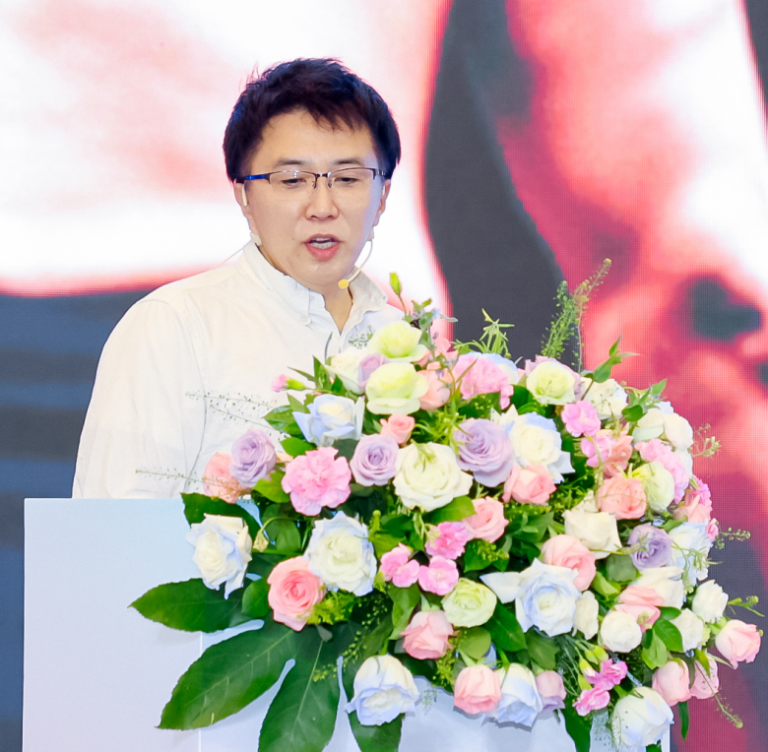 Koichi Yoshizuka is the founder and CEO of QRIE Ltd., established in 2005. QRIE specializes in importing and wholesaling compatible inks and toners for printers. The company has successfully expanded into online sales through its e-commerce site and major platforms like Rakuten, Amazon, and Yahoo! Shopping, serving a diverse clientele ranging from corporate clients to individual consumers. Renowned for quality and affordability, QRIE has won Rakuten’s Shop of the Year award in the Electronics category three times.
In addition, QRIE is actively developing new digital businesses and products driven by employee innovation. Today, QRIE boasts annual sales revenue of approximately USD 14 million and employs 45 dedicated staff members. Under Koichi Yoshizuka’s leadership, QRIE continues to thrive and innovate in the competitive printer supplies market.
Koichi Yoshizuka was also a featured speaker at the RemaxWorld Summit 2024, held in October during the RemaxWorld Expo in Zhuhai, China. In his address, he highlighted the unique characteristics of the Japanese printing and copying market.
For communication, you can contact Koichi Yoshizuka on LinkedIn.
Other posts from Koichi:
- Farewell to a Legend: David Gibbons and His Enduring Legacy
- Japan’s Journey to Paperless: Digitization and the Decline of Office Printing
- The Inevitable Decline of Postal Services in a Paperless World
- How Tokyo’s Digital Reform Threatens Japan’s Office Supply Industry
- Japan’s Digital Address Revolution Reshapes Logistics
- What ASKUL’s Pivot Teaches Us About Surviving a Shrinking Market
Comment:
Please leave your comments below for the story “What ASKUL’s Pivot Teaches Us About Surviving a Shrinking Market.”



Leave a Comment
Want to join the discussion?Feel free to contribute!